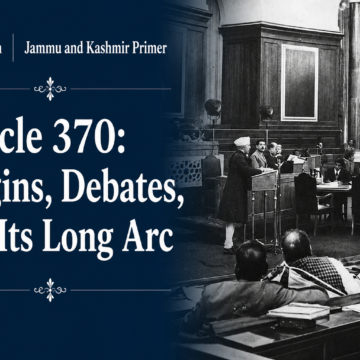
Draft Article 306A—later renumbered as Article 370—was introduced in the Constituent Assembly of India in October 1949. Ayyangar, who had served as India’s minister handling Kashmir affairs, presented it. He stressed that Jammu and Kashmir was “not yet fully normal” due to the ongoing conflict, and that a flexible constitutional mechanism was necessary until the state’s own Constituent Assembly decided its long-term arrangements.
Tag: Kashmir Explainer
From Accession in 1947 to the Delhi Agreement in 1952: Context and Timeline
In the immediate aftermath of accession, the conflict between India and Pakistan over Jammu and Kashmir assumed both military and international dimensions. India’s reference of the matter to the United Nations in January 1948 brought the issue into the global arena, leading to a series of resolutions that addressed ceasefire, demilitarisation, and the possibility of a plebiscite. At the same time, internal political developments within Jammu and Kashmir gathered momentum, with the transition from monarchical authority to a more representative system under Sheikh Abdullah.
Jammu and Kashmir in 1947: A Timeline of Key Events
During the months leading up to and following independence, developments within the state gathered pace. In early 1947, unrest was reported in parts of Poonch. Over time, the situation became more complex, with the involvement of armed elements from across the western frontiers. By October 1947, large-scale incursions by tribal fighters from areas of the North-West Frontier had begun in parts of Jammu and Kashmir.
Between 1931 Agitation and Accession in 1947: Context and Timeline
The events beginning with the agitation of 1931 introduced a new phase of political assertion in Jammu and Kashmir, particularly in the Kashmir Valley. Over time, this led to the formation of organised political platforms, articulation of socio-economic demands, and calls for representative governance.
Dogra State of Jammu and Kashmir: A Timeline of Maharajas
Following Gulab Singh, the Dogra dynasty continued under successive rulers—Ranbir Singh, Pratap Singh, and Hari Singh—each of whom presided over different phases of consolidation, reform, and political change. This period, extending from 1846 to 1947, remains central to understanding the territorial and administrative foundations of present-day Jammu and Kashmir.
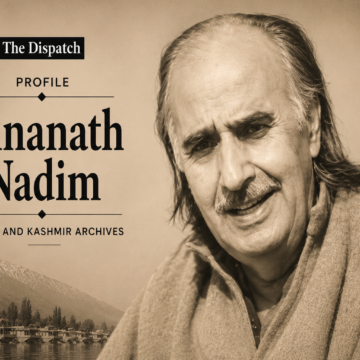
Dina Nath Nadim
Poet of Modern Kashmir and Voice of Cultural Awakening
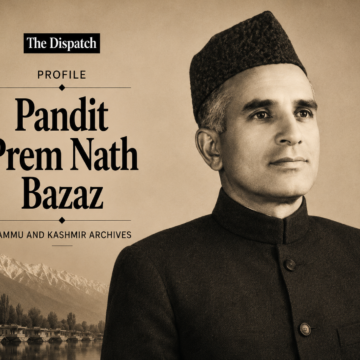
Prem Nath Bazaz
Journalist, Intellectual, and Independent Voice in Kashmir’s Political Thought
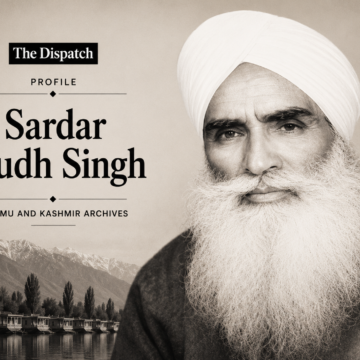
Sardar Budh Singh
Early Political Activist, National Conference Leader, and Sikh Voice in Jammu and Kashmir
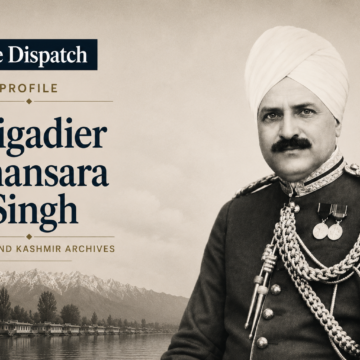
Brigadier Ghansara Singh
Last Governor of Gilgit, Soldier-Administrator, and Transitional Political Figure
Jammu versus Kashmir: The political scene that began to shape up in 1940s
By the 1940s, Jammu and Kashmir had developed two distinct yet interconnected political spheres. The Valley and the Jammu region shared concerns about representation, economic opportunity, and the future of the Dogra state, but their political cultures, organisational forms, and public priorities differed markedly. These differences were shaped by social composition, economic structure, historical experience,...