
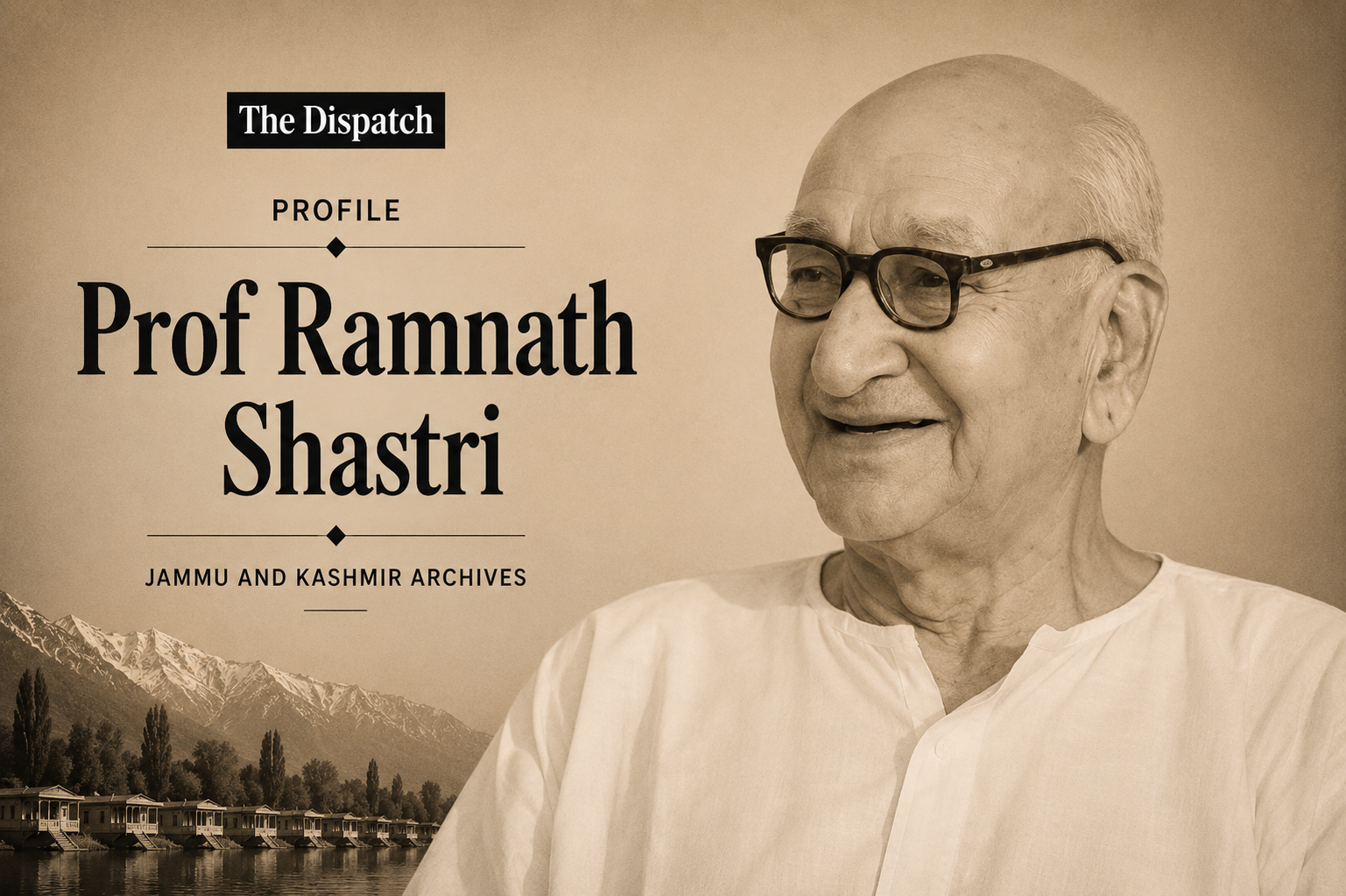
Scholar, Institution Builder, and Architect of Modern Dogri Literature
Before Dogri could be written with confidence, it had to be organised, standardised, and argued for. Ram Nath Shastri belonged to the generation that took on that task.
Born in 1914 in Jammu, Shastri grew up in a milieu where Dogri was widely spoken but lacked formal literary recognition. Unlike poetry that emerges from instinct, his contribution was deliberate—rooted in scholarship, structure, and sustained effort.
He was among the leading figures associated with the Dogri Sanstha, an institution that played a central role in promoting Dogri language and literature. Through this platform, Shastri and his contemporaries worked to establish Dogri as a legitimate literary medium, capable of supporting both creative and academic work.
Shastri’s own writings reflected this commitment. He worked across genres—poetry, essays, and linguistic studies—contributing to both the creative and intellectual foundations of the language. His approach was not limited to expression; it extended to codifying and nurturing a literary ecosystem.
At a time when questions of language were closely tied to identity, his work assumed broader significance. The effort to promote Dogri was not merely cultural—it was also about recognition, representation, and place within the wider Indian literary framework.
He was instrumental in advancing the case for Dogri at institutional levels, contributing to its eventual recognition in national literary discourse. His association with academic and cultural bodies ensured that the movement did not remain confined to informal circles.
Unlike poets who captured emotion, Shastri’s role was to ensure that the language itself could sustain such expression. In that sense, his work often remained in the background—but it was foundational.
Over the decades, Dogri literature expanded in scope and recognition, with writers like Padma Sachdev carrying it into wider public consciousness. That trajectory rested, in part, on the groundwork laid by Shastri and his peers.
He passed away in 2009.
By then, the question of whether Dogri could be a literary language had already been settled. The conversation had moved ahead—and he had helped make that possible.
Further Reading
- Studies on the Dogri Sanstha and language movement in Jammu
- Research on regional language movements in post-Independence India
- Works and essays by Ram Nath Shastri on Dogri language and literature
Leave a Reply