
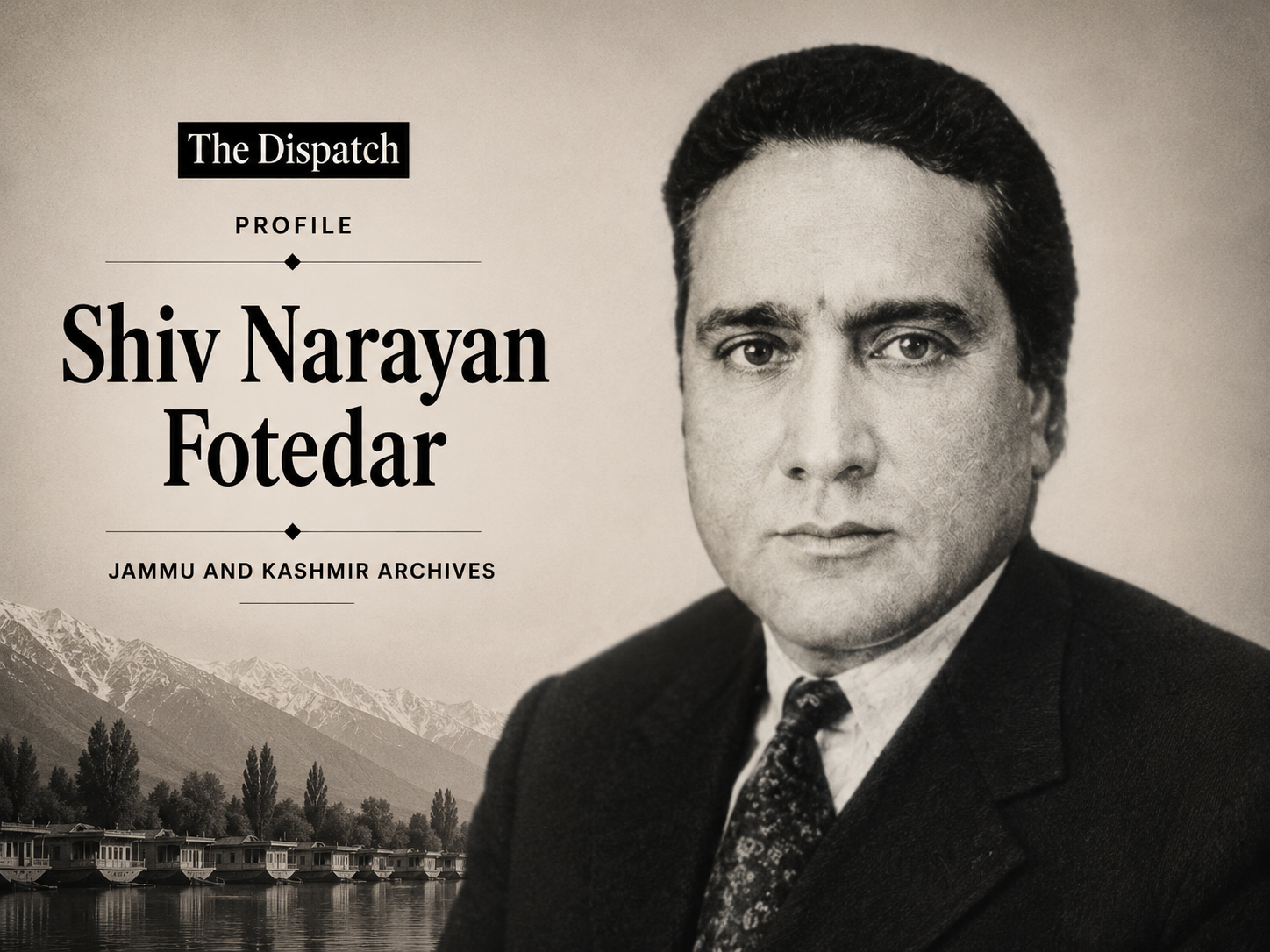
Congress Strategist, Indira Gandhi Loyalist, and Delhi–Kashmir Interlocutor
Shiv Narain Fotedar, born on 19 February 1931 in Srinagar, was among the most influential Kashmiri Pandit politicians to operate within the national political framework of post-Independence India. Unlike many of his contemporaries who built their careers within the territorial politics of Jammu and Kashmir, Fotedar’s influence was exercised primarily through the corridors of power in New Delhi, where he emerged as a trusted political aide and strategist.
Educated in Kashmir and later at the University of Delhi, Fotedar entered public life through student politics and early engagement with the Indian National Congress. Over time, he developed close political associations that would define his career, most notably with Indira Gandhi. He became one of her most trusted confidants and political managers, particularly during the turbulent years of the 1970s and early 1980s.
Fotedar’s role within the Congress system was not that of a mass leader but of an organiser, negotiator, and backroom strategist. He was part of a small group of political aides who operated at the highest levels of decision-making, often away from public visibility. His political instincts, organisational skills, and loyalty ensured his continued relevance within the party across decades.
His connection to Jammu and Kashmir remained constant. Fotedar was among those in New Delhi who maintained close links with political developments in the state and was often involved, directly or indirectly, in managing Centre–State relations. His proximity to Indira Gandhi placed him in a position to influence or interpret the evolving political dynamics of Kashmir during a critical period that included the 1975 accord with Sheikh Mohammad Abdullah and the subsequent re-entry of Sheikh into power.
Over time, Fotedar also developed working relationships with successive Kashmiri leaders, including Farooq Abdullah. He was regarded as someone who understood the sensitivities of Kashmir while remaining firmly anchored within the national political framework.
Fotedar held several important organisational and ministerial positions. He served as a Union Minister and was also a key functionary within the Congress party structure. His political career extended into the Rajya Sabha, where he represented his party at the national level.
Despite his long association with power, Fotedar maintained a relatively low public profile. He was known more for his access and influence than for public speeches or electoral mobilisation. His career reflects a style of politics that operates through networks, trust, and proximity to leadership rather than mass appeal.
In later years, particularly after the decline of the Congress party’s central dominance, Fotedar remained a respected but less influential figure. He also had periods of political distance from the party leadership, reflecting the changing internal dynamics of the Congress.
Shiv Narain Fotedar died in 2016.
His legacy lies in his role as a crucial link between Kashmir and New Delhi during a formative period. He represents a category of political actors whose influence is not always visible in public narratives but is significant in shaping decisions at the highest levels. In the context of Jammu and Kashmir, Fotedar’s career underscores the importance of intermediaries who operated within national power structures while retaining an understanding of regional complexities.
Leave a Reply